 VapeWholesaleHub
Atomizers Compliance Basics for Importers — Online Sellers
This page is written for the person who has to sign the purchase order, not for the person who designed the packaging. If you are weighing up atomizers right now, the sections below follow the order in which the real decisions tend to arrive.
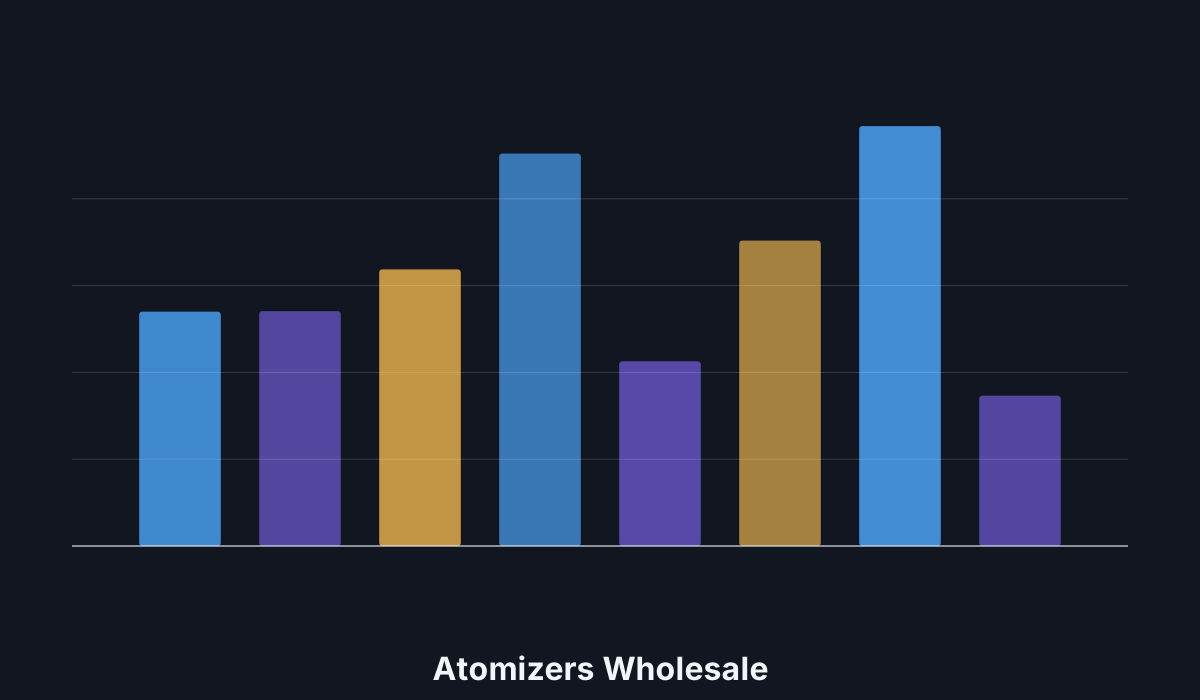
Modelling a Healthy Margin
When atomizers input costs move, ask which component moved. A generic price increase hides whether you are paying for cells, packaging or simply a busy production calendar.
Watch the atomizers price you pay over a year rather than per order. Factories respond well to visible volume, and a quarterly review is usually worth more than a hard negotiation each time.
Indicative reference points for planning purposes: entry tier from USD 1.44 per unit at 500 units, mid tier at USD 0.97, and volume tier at USD 0.88 for full container quantities. These figures move with specification, packaging and freight, so treat them as a shape rather than a quote.
Inspection Before Dispatch
The defect rate that matters is the one your customer experiences, not the one the factory reports. Bridge that gap by inspecting the way a customer would open the box, not the way a line worker packs it.
Keep a photo record of every atomizers approval sample. Written descriptions age badly; a dated photograph next to a delivered unit settles most arguments in seconds.
- Check carton dimensions against your freight quote before confirming.
- Model landed cost, not ex-works price, when comparing quotes.
- Keep sealed retained samples from every production batch.
- Confirm the current customs classification with your own broker.
- Agree the tolerance band in writing before approving artwork.
How Atomizers Fits the Assortment
Think about where atomizers sits in your customer's week. If it is a weekly restock, breadth matters less than availability. If it is an occasional treat, flavour range and display story carry more weight.
Think about where atomizers sits in your customer's week. If it is a weekly restock, breadth matters less than availability. If it is an occasional treat, flavour range and display story carry more weight.
Where Demand Is Heading
Traceability is moving from a nice-to-have to a requirement in several atomizers markets. Building the habit now is cheaper than retrofitting record keeping under pressure later.
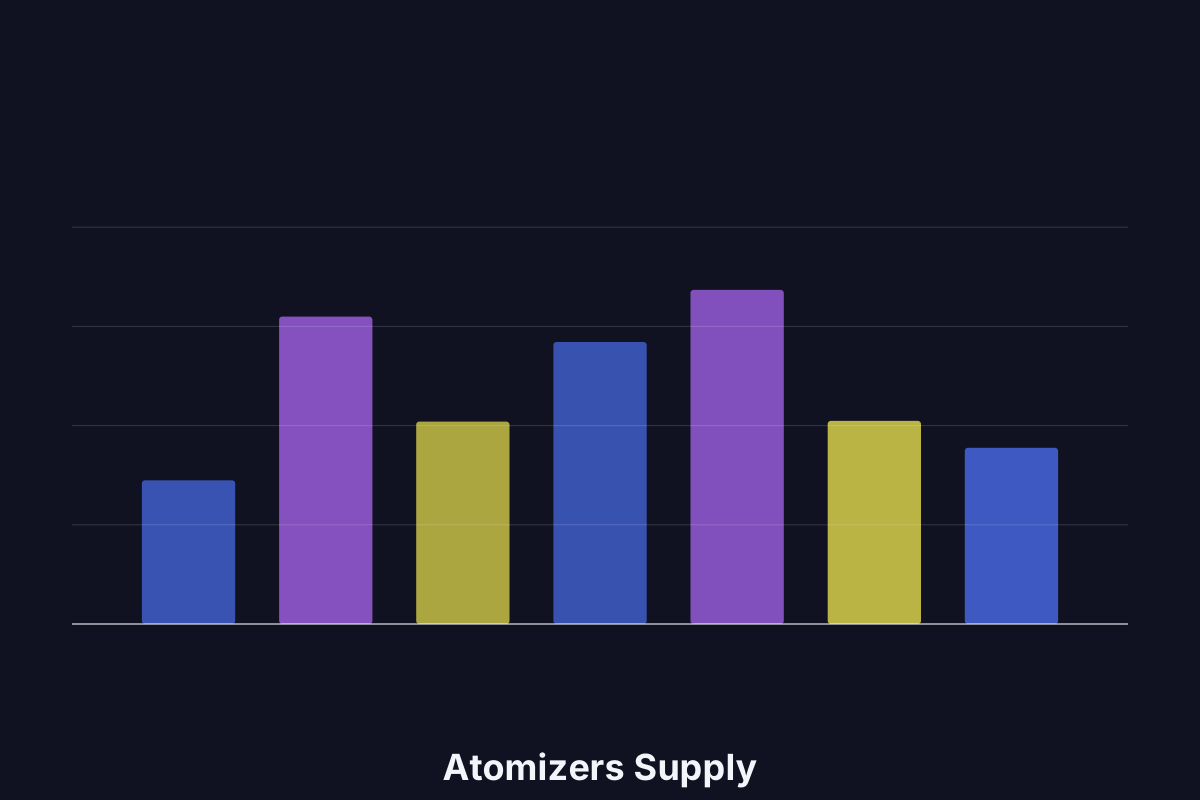
Reading a Atomizers Spec Sheet
When we write a atomizers specification with a distributor, we fix four things first: the resistance band, the liquid capacity tolerance, the puff count methodology and the packaging master carton. Everything else can flex without changing the customer experience.
Revisit the atomizers specification after every third order. Small improvements compound, and factories take a buyer more seriously when the document has clearly been used.
| Product category | Pod system |
|---|---|
| Resistance band | 1.2 - 1.4 ohm |
| Capacity tolerance | +/- 3% |
| Puff count method | Declared by capacity |
| Master carton | 120 units |
| Carton weight | 9.2 kg |
| Shelf life | 12 months |
| Storage | 15-25 C, dry, away from direct light |
Practical Checklist
- Keep sealed retained samples from every production batch.
- Check carton dimensions against your freight quote before confirming.
- Agree the tolerance band in writing before approving artwork.
- Model landed cost, not ex-works price, when comparing quotes.
- Rotate stock by batch code rather than by delivery date.
- Start with a mixed carton and let your own sell-through decide.
Frequently Asked Questions
Can you match an existing product I already sell?
Often yes, provided we can measure it properly. Send a physical sample and we will report back on what can be matched, what will differ slightly, and why. An honest gap is more useful than a vague promise.
Is there a warranty on atomizers?
Manufacturing defects are covered against the retained sample standard. Normal wear, misuse and damage after opening are not. We publish the threshold in the order terms so both sides know exactly what the claim process looks like.
What if a batch does not match the sample?
Keep the retained samples from the approval stage. If a delivered batch measurably differs, we compare against the retained set and resolve it against the production record. This is why we insist on sealed retained units from every run.
How should atomizers be stored?
Cool, dry and out of direct sunlight. Heat and light are the two things that shorten shelf life fastest. Rotate stock by batch code rather than by arrival date, and keep cartons off concrete floors in humid warehouses.
Next Step
Nobody wins when a first order is too large to learn from. Start with a mixed carton, check how it moves in your own market, then scale the lines that earned the shelf space.
Related Reading
- Warehouse Layout Tips for Atomizers Distributors — EU Markets
- Atomizers Trade Show Buying Tactics — Three Price Tiers
- How to Store Atomizers Stock Without Losing Freshness — Wholesale Clubs
- Testing Atomizers Consistency Across Three Batches — Latin America
- Atomizers Forecasting Without Historical Data — 2026 Edition
- Atomizers vs Standard Alternatives: What Changes for Your Shelf — First-Time Importers