 VapeWholesaleHub
Atomizers Component Sourcing Behind the Finished Unit — UK and Ireland
Atomizers has moved from a niche listing to a category that most vape retailers simply have to carry. That popularity brought a flood of near identical offers. This guide explains how to separate a repeatable supply chain from a lucky sample.
Where Atomizers Sits in the Range
Category planning for atomizers works best when you map it against three shopper types: the restocker who already knows what they want, the switcher who wants something stronger, and the explorer who buys on flavour name alone.
Before anything else, decide which customer you are buying atomizers for. A convenience counter with limited shelf depth needs a tight range that turns quickly, while a specialist shop can carry a deeper ladder of options and educate buyers into higher ticket lines.
What Atomizers Really Costs Landed
Tiered pricing works best when the tiers match real customer behaviour. Most atomizers buyers will take the second tier if the step is modest and the third tier only if they can see a genuine reason to hold more stock.
Indicative reference points for planning purposes: entry tier from USD 2.03 per unit at 2000 units, mid tier at USD 1.73, and volume tier at USD 1.20 for full container quantities. These figures move with specification, packaging and freight, so treat them as a shape rather than a quote.
Where Demand Is Heading
Assortment rationalisation is the quiet trend in this category. Shops that cut their atomizers range from twelve lines to five well chosen ones often report higher total sales, not lower.
Reading a Atomizers Spec Sheet
Two specifications that matter more than buyers expect: the seal integrity after a drop test and the consistency of the draw from first use to last. Both are measurable before you commit to volume.
| Product category | Open system |
|---|---|
| Resistance band | 1.2 - 1.4 ohm |
| Capacity tolerance | +/- 5% |
| Puff count method | Machine cycle 2s on / 18s off |
| Master carton | 300 units |
| Carton weight | 11.1 kg |
| Shelf life | 24 months |
| Storage | 15-25 C, dry, away from direct light |
Getting Atomizers to Your Warehouse
Carton dimensions for atomizers are a design decision, not a packing afterthought. A few centimetres on the master carton can change how many units fit a pallet, and that repeats on every order.
Plan the atomizers customs paperwork at the same time as the order, not when the goods are on the water. A missing document costs more in demurrage than the entire freight saving from a cheap forwarder.
Practical Checklist
- Check carton dimensions against your freight quote before confirming.
- Agree the tolerance band in writing before approving artwork.
- Rotate stock by batch code rather than by delivery date.
- Keep sealed retained samples from every production batch.
- Plan the switch from air to sea freight before you need it.
- Write the complaint threshold into the order terms.
Frequently Asked Questions
Can I mix strengths in one order?
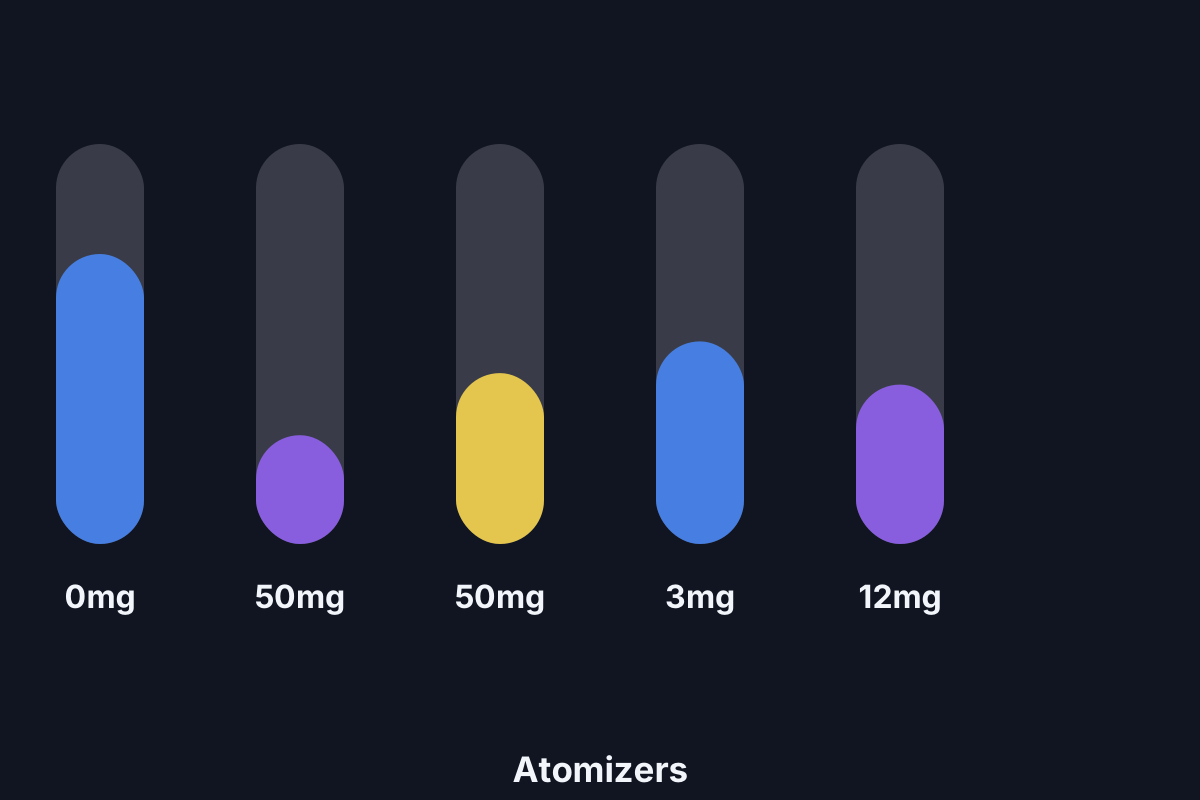
In most cases yes, as long as each strength meets the minimum run length. Mixed strength cartons are popular with retailers building their first display because they show the full ladder without over committing.
Can you match an existing product I already sell?
Often yes, provided we can measure it properly. Send a physical sample and we will report back on what can be matched, what will differ slightly, and why. An honest gap is more useful than a vague promise.
How should atomizers be stored?
Cool, dry and out of direct sunlight. Heat and light are the two things that shorten shelf life fastest. Rotate stock by batch code rather than by arrival date, and keep cartons off concrete floors in humid warehouses.
How are price changes handled on repeat orders?
{K} pricing is reviewed against input costs and volume rather than adjusted casually. Any change is confirmed in writing before the next order is scheduled, with the reason stated so you can judge it yourself.
Do you provide compliance documents?
Every shipment leaves with the documentation set relevant to your market, including batch records and test reports where required. Your local rules still determine what you must file, so confirm those with your broker before import.
Next Step
Whatever you decide, decide it against numbers you can check on arrival. That single discipline removes most of the risk from importing atomizers.
Related Reading
- Atomizers Tolerance Bands That Hold Up in Production — Freight Included
- Atomizers Emissions and Leak Testing Methods — Southeast Asia
- Atomizers Cost Breakdown: What You Are Really Paying For — Private Label Programmes
- How to Choose Atomizers Without Overpaying — Online Sellers
- Atomizers Monthly Review Ritual for Buyers — Oceania
- Atomizers Freight Forwarder Selection Notes — Established Chains