 VapeWholesaleHub
Atomizers Distributor Onboarding Steps — UK and Ireland
There is no clever trick to buying atomizers well. There is a short list of things worth checking and a long list of things that distract from them. This page is an attempt at the short list.
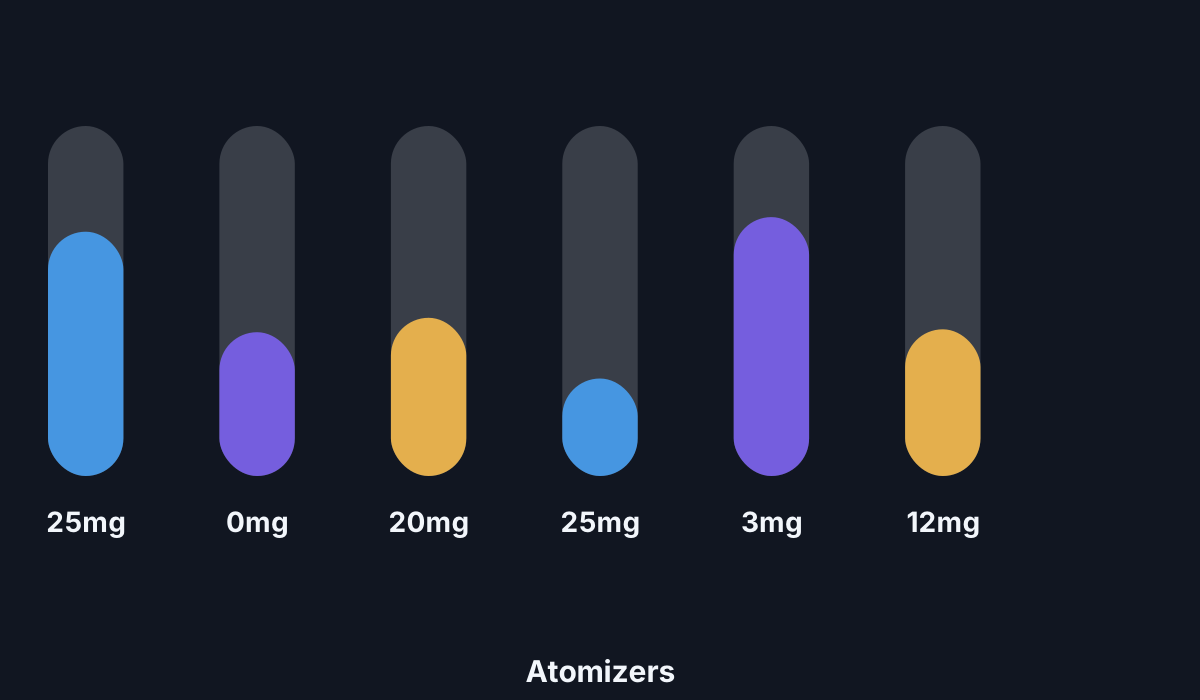
What Atomizers Really Costs Landed
Discounting atomizers to win shelf space tends to reset customer expectations permanently. Volume support in kind, such as display material, usually costs less in the long run.
Indicative reference points for planning purposes: entry tier from USD 1.54 per unit at 500 units, mid tier at USD 1.18, and volume tier at USD 0.98 for full container quantities. These figures move with specification, packaging and freight, so treat them as a shape rather than a quote.
Reading a Atomizers Spec Sheet
Ask for the atomizers specification in the same units you intend to measure in. A metric quoted in a form you cannot verify on arrival is not a specification, it is a claim.
A written atomizers specification should be short enough to read in a minute and precise enough to argue about. If a factory cannot confirm a number in writing, assume the number is whatever is cheapest that week.
| Product category | Open system |
|---|---|
| Resistance band | 1.0 - 1.2 ohm |
| Capacity tolerance | +/- 3% |
| Puff count method | Machine cycle 3s on / 27s off |
| Master carton | 200 units |
| Carton weight | 8.7 kg |
| Shelf life | 12 months |
| Storage | 15-25 C, dry, away from direct light |
Positioning Atomizers on Your Shelf
Atomizers rewards retailers who can explain it in one sentence. If your team needs a paragraph, the range is too complicated for the space it occupies.
Freight, Customs and Timing
Model atomizers freight both ways before choosing a method: cost per unit and cost per week of delay. The second figure is the one that decides whether a cheap option was actually cheap.
Selling Atomizers at Store Level
Online, shoot atomizers at a consistent scale across the range. Customers compare by eye, and inconsistent product photography creates returns that have nothing to do with the product.
Practical Checklist
- Agree the tolerance band in writing before approving artwork.
- Write the complaint threshold into the order terms.
- Confirm the current customs classification with your own broker.
- Keep sealed retained samples from every production batch.
- Start with a mixed carton and let your own sell-through decide.
- Ask how the factory measures puff count, then compare like with like.
Frequently Asked Questions
How should atomizers be stored?
Cool, dry and out of direct sunlight. Heat and light are the two things that shorten shelf life fastest. Rotate stock by batch code rather than by arrival date, and keep cartons off concrete floors in humid warehouses.
Is there support for in-store material?
Yes. Shelf talkers, counter cards and simple planogram suggestions are available for atomizers ranges that reach a sensible volume. Most retailers find the plain strength and flavour cards do the most work.
What happens if my market changes its rules?
Regulations move, and packaging or documentation sometimes has to follow. We keep approved artwork files on hand so that a required change is a reprint rather than a redesign, which keeps the cost and delay down.
Can the packaging be customised?
Yes. Most atomizers programmes use private label packaging once volumes justify the printing plate. We supply dielines, check your artwork for print issues and hold approved files so reorders need no new setup.
Next Step
Whether you order from us or elsewhere, keep a retained sample from every batch. It costs almost nothing and it is the single most effective protection available to a atomizers buyer.
Related Reading
- Pricing Atomizers for Healthy Retail Margins — Before Your Next Order
- Atomizers Working With a Local Compliance Partner — Repeat Orders
- Atomizers Child Resistant Closure Considerations — Three Price Tiers
- Atomizers Emissions and Leak Testing Methods — Private Label Programmes
- Atomizers Counterfeit Risk and Serialisation — Step by Step
- Atomizers Copy That Answers Buyer Objections — 2026 Edition