 VapeWholesaleHub
Atomizers Import Duty Planning for Distributors — Repeat Orders
If you are comparing atomizers suppliers right now, you are probably looking at three quotes that look identical and cost very different amounts. That gap usually comes down to cell grade, coil consistency and how honest the factory is about tolerances. Let us unpack it.
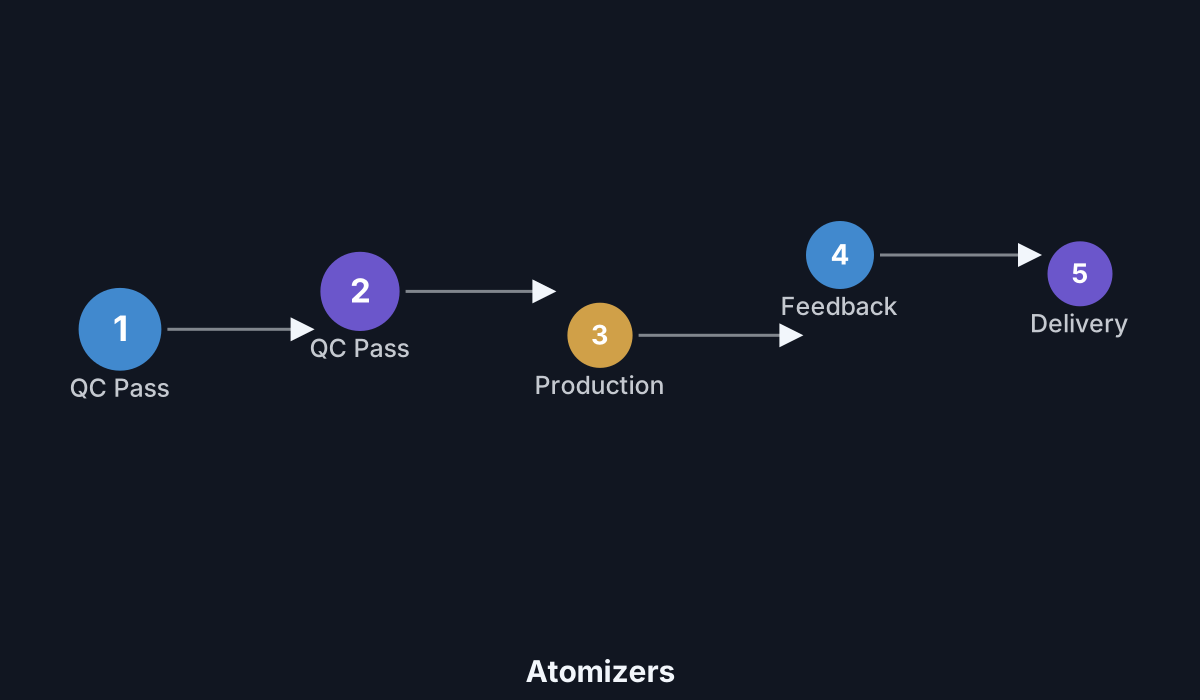
The Specification That Matters
Good atomizers specs describe the failure boundaries, not just the target. Stating what is unacceptable gives the factory a clear production window instead of a single point they will miss half the time.
| Product category | Open system |
|---|---|
| Resistance band | 1.0 - 1.2 ohm |
| Capacity tolerance | +/- 5% |
| Puff count method | Machine cycle 2s on / 18s off |
| Master carton | 120 units |
| Carton weight | 10.2 kg |
| Shelf life | 12 months |
| Storage | 15-25 C, dry, away from direct light |
Selling Atomizers at Store Level
Rotate atomizers facing rather than price for the first month. Visibility changes sell-through more reliably than a small discount, and it does not train customers to wait for offers.
Put atomizers where the decision is made, not where the margin is highest. In most stores that means near the counter or at eye level in the category, rather than wherever there is spare space.
Trends Worth Watching
One shift worth planning for: shorter atomizers reorder cycles with smaller average drops. It favours suppliers with flexible production slots over those who only want large annual commitments.
Assortment rationalisation is the quiet trend in this category. Shops that cut their atomizers range from twelve lines to five well chosen ones often report higher total sales, not lower.
Positioning Atomizers on Your Shelf
Think about where atomizers sits in your customer's week. If it is a weekly restock, breadth matters less than availability. If it is an occasional treat, flavour range and display story carry more weight.
Quality Control in Practice
Inspection is only useful if the result is recorded somewhere you can find it later. A atomizers batch log with weights, codes and measurements turns a future complaint into a five minute lookup.
AQL sampling gets a lot of attention, but for atomizers the more useful habit is simply measuring the same three things on every single batch. Trend lines catch problems that pass/fail checks miss.
- Start with a mixed carton and let your own sell-through decide.
- Keep sealed retained samples from every production batch.
- Write the complaint threshold into the order terms.
- Plan the switch from air to sea freight before you need it.
- Check carton dimensions against your freight quote before confirming.
Modelling a Healthy Margin
Watch the atomizers price you pay over a year rather than per order. Factories respond well to visible volume, and a quarterly review is usually worth more than a hard negotiation each time.
Indicative reference points for planning purposes: entry tier from USD 2.13 per unit at 2000 units, mid tier at USD 1.53, and volume tier at USD 0.67 for full container quantities. These figures move with specification, packaging and freight, so treat them as a shape rather than a quote.
Practical Checklist
- Plan the switch from air to sea freight before you need it.
- Rotate stock by batch code rather than by delivery date.
- Start with a mixed carton and let your own sell-through decide.
- Model landed cost, not ex-works price, when comparing quotes.
- Agree the tolerance band in writing before approving artwork.
- Confirm the current customs classification with your own broker.
Frequently Asked Questions
How long does a atomizers order take to arrive?
Production typically takes ten to eighteen working days after artwork approval, and transit depends on the method you choose. Air express is fastest, sea freight is cheapest at volume. We confirm both at quotation so there is no surprise later.
What does a sample pack usually include?
A typical atomizers sample pack covers the strengths or variants you are most likely to list, packed so you can evaluate them side by side. Tell us which lines you are considering and we will match the pack to that rather than sending a generic selection.
What information do you need to quote?
Target specification, approximate quantity, destination and any packaging requirement. With those four we can usually come back with a costed option the same working day rather than a request for more information.
Is there support for in-store material?
Yes. Shelf talkers, counter cards and simple planogram suggestions are available for atomizers ranges that reach a sensible volume. Most retailers find the plain strength and flavour cards do the most work.
What happens if my market changes its rules?
Regulations move, and packaging or documentation sometimes has to follow. We keep approved artwork files on hand so that a required change is a reprint rather than a redesign, which keeps the cost and delay down.
Next Step
Nobody wins when a first order is too large to learn from. Start with a mixed carton, check how it moves in your own market, then scale the lines that earned the shelf space.
Related Reading
- Atomizers Approval Workflow From Sample to Shipment — Warehouse Teams
- Atomizers Future Outlook: Trends Worth Watching — First-Time Importers
- Atomizers Temperature Exposure During Transit — Container-Scale Orders
- Atomizers Protecting Your Private Label Design — Oceania
- Atomizers Trade Show Buying Tactics — Cross-Border Trade
- Atomizers Product Testing Laboratories Explained — North America