 VapeWholesaleHub
Atomizers Inventory Turnover Benchmarks for Stores — EU Markets
The most expensive atomizers mistake is not paying too much per unit. It is discovering after three months that the line cannot be reordered to the same standard. Consistency is the actual product.
Merchandising and Listing Tips
A atomizers display that answers strength and flavour without staff involvement outsells a prettier one that does not. Most customers will not ask, so the fixture has to do the work.
Bundle atomizers with a complementary item rather than discounting it outright. The perceived value holds up better and the second item often becomes a repeat purchase on its own.
Logistics That Protect Margin
Track atomizers landed cost per unit as a running number, including duty and local delivery. It is the only figure that tells you whether a supplier change actually improved anything.
Market Signals
One visible change in atomizers is the move towards clearer labelling and traceability. Retailers who adopted batch coding early are finding it much easier to work with larger distributors now.
Pricing and Margin
The cheapest atomizers quote is rarely the cheapest outcome. Add freight, defect handling, delay risk and the staff time spent chasing, then compare again. The ranking often changes.
Indicative reference points for planning purposes: entry tier from USD 1.94 per unit at 500 units, mid tier at USD 1.31, and volume tier at USD 1.38 for full container quantities. These figures move with specification, packaging and freight, so treat them as a shape rather than a quote.
Positioning Atomizers on Your Shelf
Decide early whether atomizers is a traffic driver or a margin line in your store. The answer changes how you price it, where you place it and how hard you push it at the counter.
A tight atomizers range with deep availability usually outsells a wide range with thin stock. Customers who find their line in stock come back; customers who are told to wait do not.
Practical Checklist
- Agree the tolerance band in writing before approving artwork.
- Ask how the factory measures puff count, then compare like with like.
- Write the complaint threshold into the order terms.
- Confirm the current customs classification with your own broker.
- Keep sealed retained samples from every production batch.
- Check carton dimensions against your freight quote before confirming.
Frequently Asked Questions
Do you provide compliance documents?
Every shipment leaves with the documentation set relevant to your market, including batch records and test reports where required. Your local rules still determine what you must file, so confirm those with your broker before import.
How long does a atomizers order take to arrive?
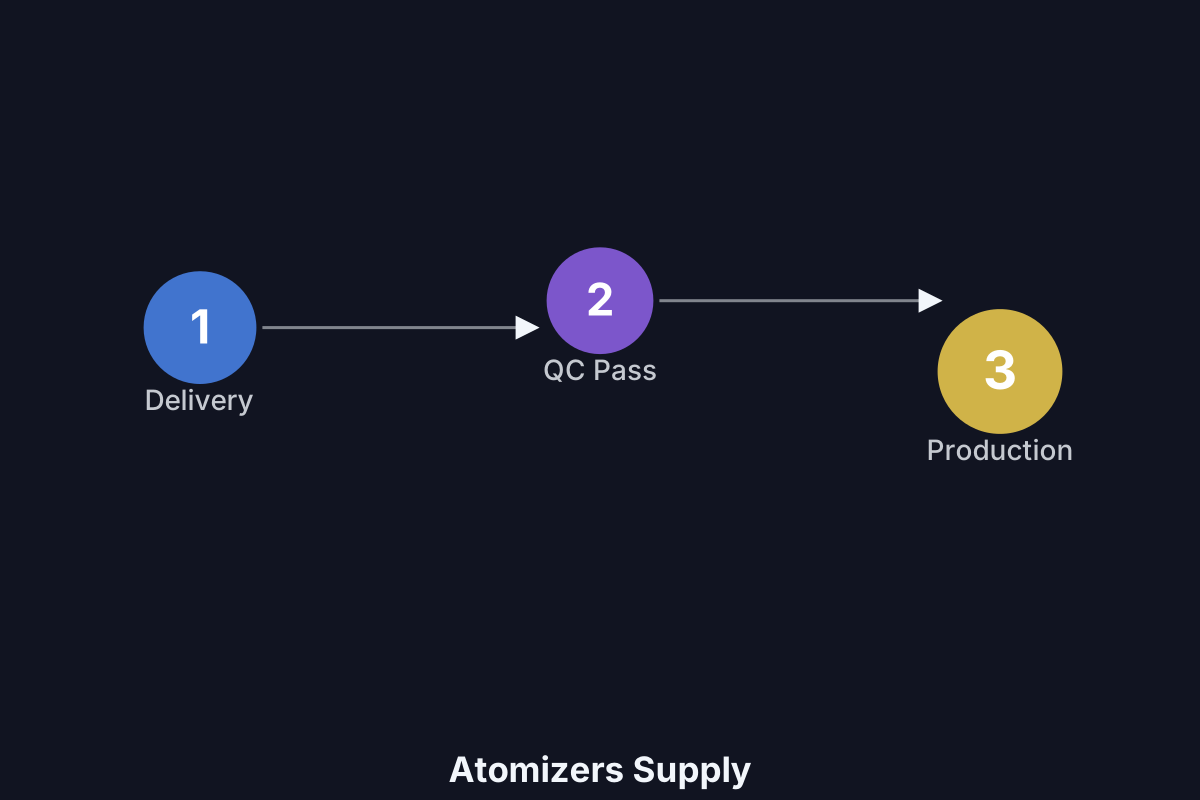
Production typically takes ten to eighteen working days after artwork approval, and transit depends on the method you choose. Air express is fastest, sea freight is cheapest at volume. We confirm both at quotation so there is no surprise later.
Can I mix strengths in one order?
In most cases yes, as long as each strength meets the minimum run length. Mixed strength cartons are popular with retailers building their first display because they show the full ladder without over committing.
What does a sample pack usually include?
A typical atomizers sample pack covers the strengths or variants you are most likely to list, packed so you can evaluate them side by side. Tell us which lines you are considering and we will match the pack to that rather than sending a generic selection.
Next Step
Nobody wins when a first order is too large to learn from. Start with a mixed carton, check how it moves in your own market, then scale the lines that earned the shelf space.
Related Reading
- Atomizers Case Study: From First Pallet to Repeat Container — Small Batch Buyers
- Atomizers Reading Factory Capacity Honestly — Low Minimum Quantities
- Seasonal Planning for Atomizers Inventory — Step by Step
- Atomizers Clearance Strategies That Protect Margin — Repeat Orders
- Atomizers Dual Sourcing Without Losing Consistency — UK and Ireland
- Atomizers Promotional Mechanics That Do Not Erode Value — Tight Margin Categories