 VapeWholesaleHub
Atomizers Order Consolidation Across Suppliers — Established Chains
If you are comparing atomizers suppliers right now, you are probably looking at three quotes that look identical and cost very different amounts. That gap usually comes down to cell grade, coil consistency and how honest the factory is about tolerances. Let us unpack it.
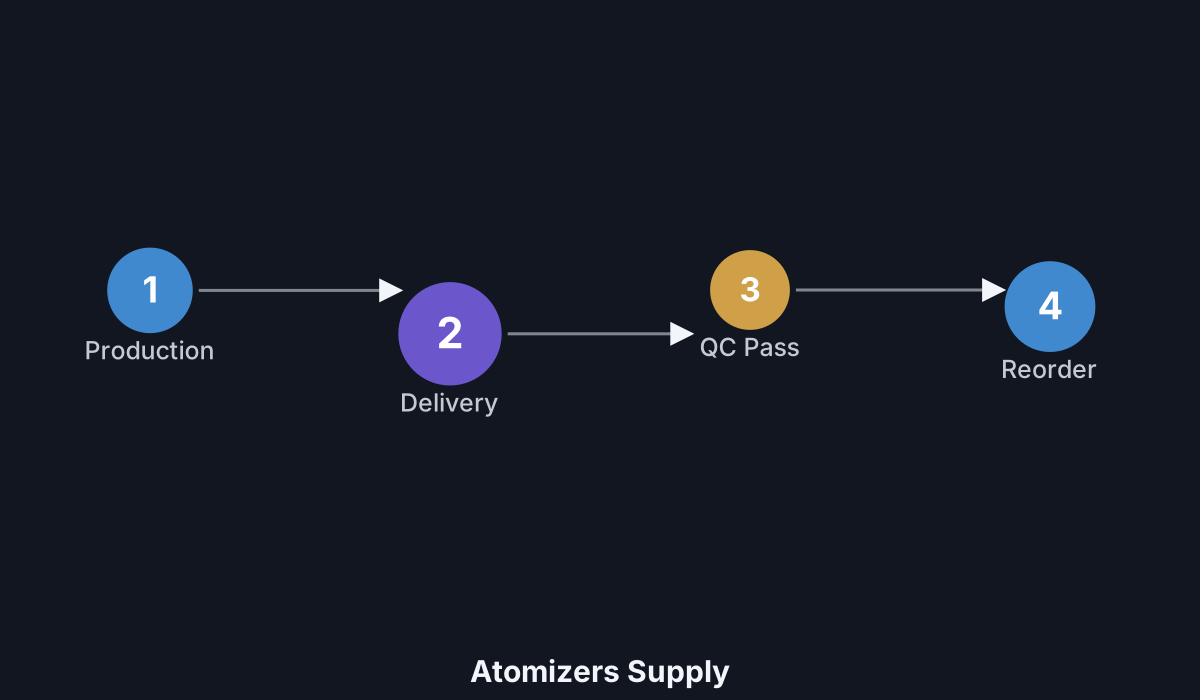
What Atomizers Really Costs Landed
The cheapest atomizers quote is rarely the cheapest outcome. Add freight, defect handling, delay risk and the staff time spent chasing, then compare again. The ranking often changes.
Margin on atomizers is rarely lost at the till. It is lost through dead stock, returns and emergency air freight. A slightly higher landed cost with predictable lead time usually beats the cheapest quote on the spreadsheet.
Indicative reference points for planning purposes: entry tier from USD 0.99 per unit at 500 units, mid tier at USD 1.19, and volume tier at USD 0.70 for full container quantities. These figures move with specification, packaging and freight, so treat them as a shape rather than a quote.
Where Demand Is Heading
One visible change in atomizers is the move towards clearer labelling and traceability. Retailers who adopted batch coding early are finding it much easier to work with larger distributors now.
The atomizers category is consolidating around suppliers who can document what they ship. Buyers who built that requirement into their process early are now finding it much easier to scale.
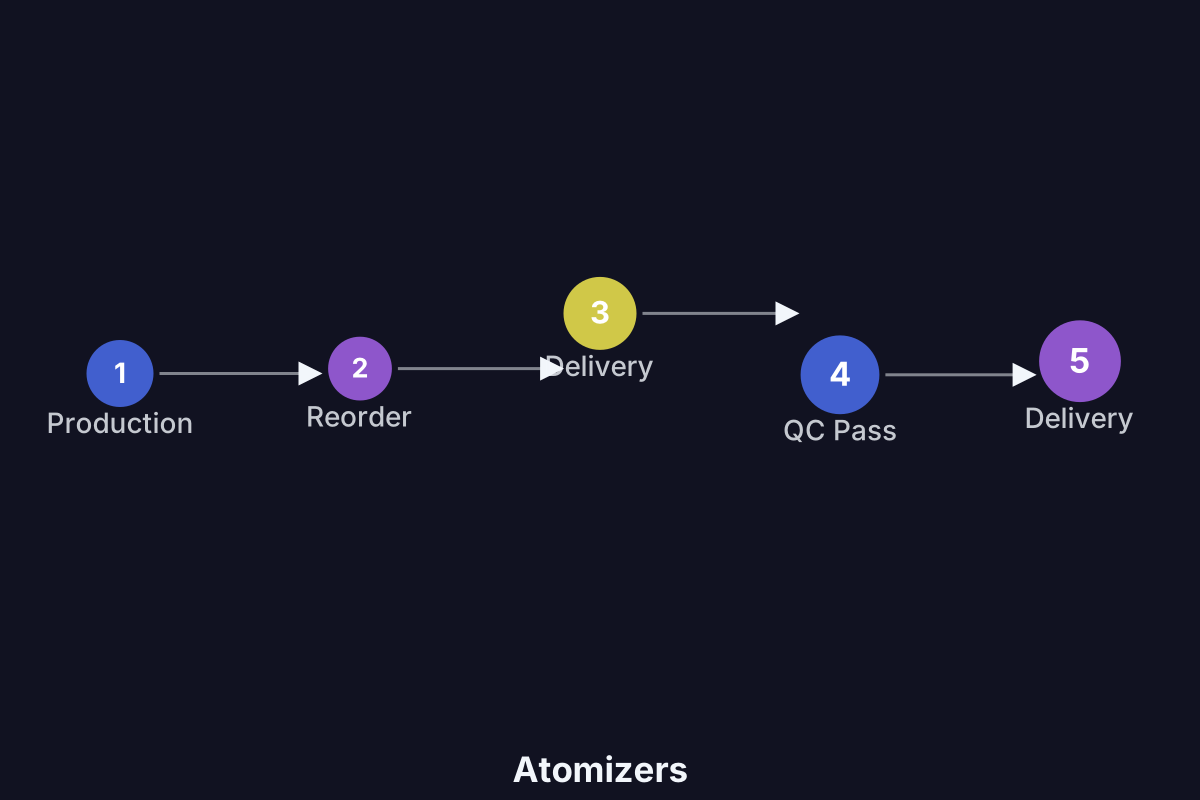
Reading a Atomizers Spec Sheet
Revisit the atomizers specification after every third order. Small improvements compound, and factories take a buyer more seriously when the document has clearly been used.
Specification sheets are where a atomizers deal is won or quietly lost. Two samples can look and taste the same while using different coil wire, different wicking density and different tolerances on the mouthpiece. Those details decide how the unit behaves in week three rather than minute three.
| Product category | Refillable kit |
|---|---|
| Resistance band | 1.2 - 1.4 ohm |
| Capacity tolerance | +/- 3% |
| Puff count method | Declared by capacity |
| Master carton | 100 units |
| Carton weight | 6.3 kg |
| Shelf life | 24 months |
| Storage | 15-25 C, dry, away from direct light |
Positioning Atomizers on Your Shelf
One useful exercise: list every atomizers line you stock and mark the last date each one sold at full price. Anything without a recent full price sale is taking space from something that would use it better.
Freight, Customs and Timing
Ask your forwarder for the atomizers transit history on your lane, not the advertised schedule. The gap between the two is the buffer you should build into your reorder point.
Model atomizers freight both ways before choosing a method: cost per unit and cost per week of delay. The second figure is the one that decides whether a cheap option was actually cheap.
Practical Checklist
- Check carton dimensions against your freight quote before confirming.
- Model landed cost, not ex-works price, when comparing quotes.
- Agree the tolerance band in writing before approving artwork.
- Write the complaint threshold into the order terms.
- Ask how the factory measures puff count, then compare like with like.
- Rotate stock by batch code rather than by delivery date.
Frequently Asked Questions
How are price changes handled on repeat orders?
{K} pricing is reviewed against input costs and volume rather than adjusted casually. Any change is confirmed in writing before the next order is scheduled, with the reason stated so you can judge it yourself.
Can you match an existing product I already sell?
Often yes, provided we can measure it properly. Send a physical sample and we will report back on what can be matched, what will differ slightly, and why. An honest gap is more useful than a vague promise.
Do you provide compliance documents?
Every shipment leaves with the documentation set relevant to your market, including batch records and test reports where required. Your local rules still determine what you must file, so confirm those with your broker before import.
What information do you need to quote?
Target specification, approximate quantity, destination and any packaging requirement. With those four we can usually come back with a costed option the same working day rather than a request for more information.
Next Step
Questions that are not answered here are usually the interesting ones. Reach out with the specifics of your market and we will answer with numbers rather than adjectives.
Related Reading
- Atomizers Pallet Configuration for Mixed Orders — Warehouse Teams
- Certification Routes for Atomizers in Different Markets — Online Sellers
- Atomizers KPI Set for Wholesale Operations — New Distributors
- Atomizers Storage Life Extension Through Better Handling — Plain Language
- Atomizers Contract Clauses Worth Negotiating — Latin America
- Atomizers Tooling and Moulding Cost Structures — Container-Scale Orders