 VapeWholesaleHub
Atomizers When to Add a Second Factory — Plain Language
Most first time importers of atomizers ask the same five questions. This page answers them in the order they usually arrive, with the numbers we quote internally rather than round marketing claims.
What Atomizers Really Costs Landed
The cheapest atomizers quote is rarely the cheapest outcome. Add freight, defect handling, delay risk and the staff time spent chasing, then compare again. The ranking often changes.
Tiered pricing works best when the tiers match real customer behaviour. Most atomizers buyers will take the second tier if the step is modest and the third tier only if they can see a genuine reason to hold more stock.
Indicative reference points for planning purposes: entry tier from USD 1.54 per unit at 1000 units, mid tier at USD 0.87, and volume tier at USD 0.57 for full container quantities. These figures move with specification, packaging and freight, so treat them as a shape rather than a quote.
Getting Atomizers to Your Warehouse
Track atomizers landed cost per unit as a running number, including duty and local delivery. It is the only figure that tells you whether a supplier change actually improved anything.
Positioning Atomizers on Your Shelf
Category planning for atomizers works best when you map it against three shopper types: the restocker who already knows what they want, the switcher who wants something stronger, and the explorer who buys on flavour name alone.
Reading a Atomizers Spec Sheet
Good atomizers specs describe the failure boundaries, not just the target. Stating what is unacceptable gives the factory a clear production window instead of a single point they will miss half the time.
When we write a atomizers specification with a distributor, we fix four things first: the resistance band, the liquid capacity tolerance, the puff count methodology and the packaging master carton. Everything else can flex without changing the customer experience.
| Product category | Refillable kit |
|---|---|
| Resistance band | 1.0 - 1.2 ohm |
| Capacity tolerance | +/- 3% |
| Puff count method | Declared by capacity |
| Master carton | 120 units |
| Carton weight | 5.1 kg |
| Shelf life | 12 months |
| Storage | 15-25 C, dry, away from direct light |
How Atomizers Batches Are Checked
The defect rate that matters is the one your customer experiences, not the one the factory reports. Bridge that gap by inspecting the way a customer would open the box, not the way a line worker packs it.
Keep a photo record of every atomizers approval sample. Written descriptions age badly; a dated photograph next to a delivered unit settles most arguments in seconds.
- Plan the switch from air to sea freight before you need it.
- Confirm the current customs classification with your own broker.
- Agree the tolerance band in writing before approving artwork.
- Rotate stock by batch code rather than by delivery date.
- Start with a mixed carton and let your own sell-through decide.
Merchandising and Listing Tips
Use your atomizers staff training time on the two questions customers actually ask. Anything more detailed gets forgotten by the second shift.
Practical Checklist
- Plan the switch from air to sea freight before you need it.
- Start with a mixed carton and let your own sell-through decide.
- Confirm the current customs classification with your own broker.
- Keep sealed retained samples from every production batch.
- Agree the tolerance band in writing before approving artwork.
- Check carton dimensions against your freight quote before confirming.
Frequently Asked Questions
How do you handle a short shipment?
Cartons are counted and weighed before dispatch and the figures are shared with you. If something is short on arrival, the packing record and the carrier documentation are both available, which keeps the claim straightforward.
What information do you need to quote?
Target specification, approximate quantity, destination and any packaging requirement. With those four we can usually come back with a costed option the same working day rather than a request for more information.
Can I visit the production facility?
Yes, and we encourage it for larger programmes. Visits are most useful when you already have a draft specification, because you can then check the specific processes behind the numbers you care about.
How long does a atomizers order take to arrive?
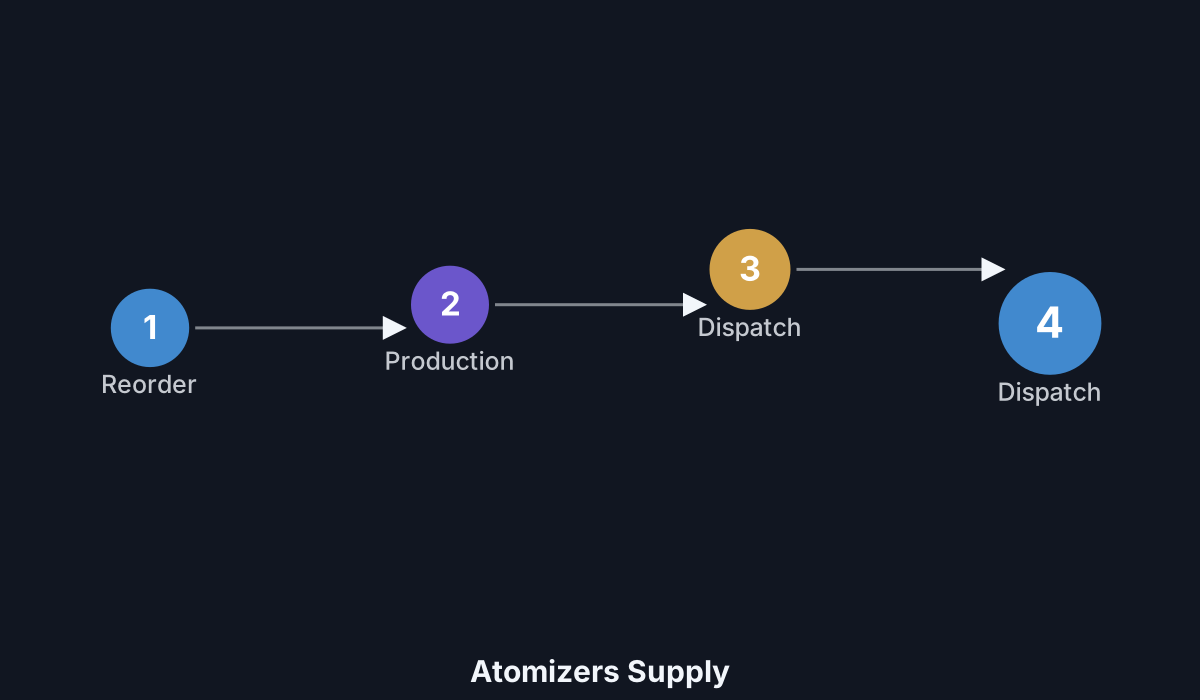
Production typically takes ten to eighteen working days after artwork approval, and transit depends on the method you choose. Air express is fastest, sea freight is cheapest at volume. We confirm both at quotation so there is no surprise later.
How should atomizers be stored?
Cool, dry and out of direct sunlight. Heat and light are the two things that shorten shelf life fastest. Rotate stock by batch code rather than by arrival date, and keep cartons off concrete floors in humid warehouses.
Next Step
We would rather quote you accurately and lose the order than quote optimistically and lose the relationship. Ask us the awkward questions early.
Related Reading
- Atomizers Pallet Configuration for Mixed Orders — Container-Scale Orders
- Atomizers Contract Clauses Worth Negotiating — Online Sellers
- Atomizers Cost Breakdown: What You Are Really Paying For — North America
- Sustainability and Take Back Programmes for Atomizers — Container-Scale Orders
- Atomizers Customer Education That Reduces Complaints — Cross-Border Trade
- Warehouse Layout Tips for Atomizers Distributors — 2026 Buyer Notes