 VapeWholesaleHub
Atomizers When to Add a Second Factory — Three Price Tiers
A atomizers programme fails in predictable ways: a specification nobody wrote down, a sample nobody retained, and a lead time nobody stress tested. Here is how to close those three gaps before they cost you a container.
Modelling a Healthy Margin
Hold a small atomizers buffer in your pricing model for currency movement. A few percent on a container is a real number, and it is easier to plan for than to absorb.
Discounting atomizers to win shelf space tends to reset customer expectations permanently. Volume support in kind, such as display material, usually costs less in the long run.
Indicative reference points for planning purposes: entry tier from USD 1.61 per unit at 500 units, mid tier at USD 1.75, and volume tier at USD 1.11 for full container quantities. These figures move with specification, packaging and freight, so treat them as a shape rather than a quote.
Selling Atomizers at Store Level
Use your atomizers staff training time on the two questions customers actually ask. Anything more detailed gets forgotten by the second shift.
On shelf, atomizers sells on clarity. A plain shelf talker that states strength and flavour in two words outperforms a beautifully designed but vague display, because most purchase decisions here take under ten seconds.
Where Demand Is Heading
Demand for atomizers has been steadily rebalancing. The early phase rewarded whoever could ship fastest; the current phase rewards whoever can ship the same thing twice. That shift favours buyers who invest in specification rather than price shopping.
Logistics That Protect Margin
Track atomizers landed cost per unit as a running number, including duty and local delivery. It is the only figure that tells you whether a supplier change actually improved anything.
How Atomizers Batches Are Checked
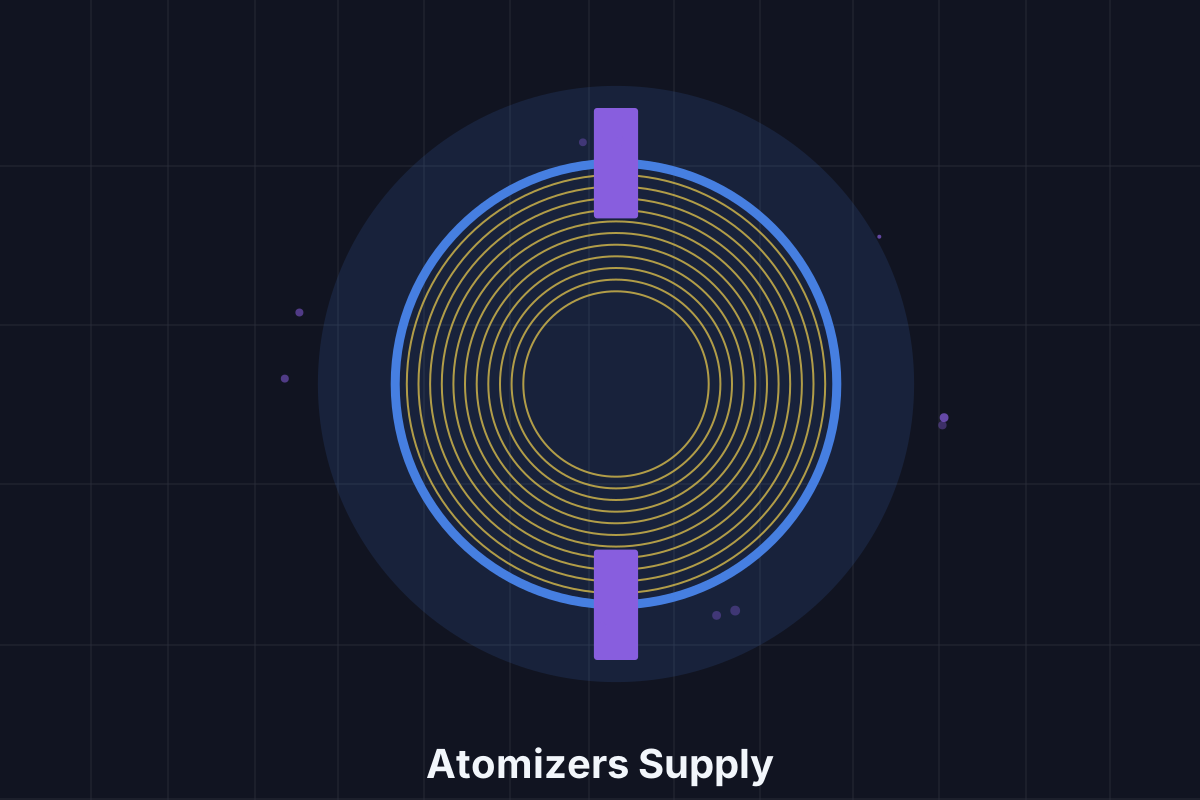
Incoming inspection for atomizers is not about opening boxes at random. We weigh a sample of cartons, check batch codes against the production record, run a draw resistance measurement, and log the results so that a complaint three months later can be traced to a specific run.
- Agree the tolerance band in writing before approving artwork.
- Confirm the current customs classification with your own broker.
- Keep sealed retained samples from every production batch.
- Model landed cost, not ex-works price, when comparing quotes.
- Check carton dimensions against your freight quote before confirming.
The Specification That Matters
Two specifications that matter more than buyers expect: the seal integrity after a drop test and the consistency of the draw from first use to last. Both are measurable before you commit to volume.
Revisit the atomizers specification after every third order. Small improvements compound, and factories take a buyer more seriously when the document has clearly been used.
| Product category | Refillable kit |
|---|---|
| Resistance band | 0.8 - 1.0 ohm |
| Capacity tolerance | +/- 5% |
| Puff count method | Machine cycle 2s on / 18s off |
| Master carton | 200 units |
| Carton weight | 4.5 kg |
| Shelf life | 18 months |
| Storage | 15-25 C, dry, away from direct light |
Practical Checklist
- Plan the switch from air to sea freight before you need it.
- Model landed cost, not ex-works price, when comparing quotes.
- Confirm the current customs classification with your own broker.
- Keep sealed retained samples from every production batch.
- Write the complaint threshold into the order terms.
- Ask how the factory measures puff count, then compare like with like.
Frequently Asked Questions
Can I visit the production facility?
Yes, and we encourage it for larger programmes. Visits are most useful when you already have a draft specification, because you can then check the specific processes behind the numbers you care about.
What if I only need a small first order?
That is normal and sensible. A mixed carton lets you test atomizers in your own market before committing to a production run, and the specification you approve at that stage carries through to larger orders unchanged.
How do you handle a short shipment?
Cartons are counted and weighed before dispatch and the figures are shared with you. If something is short on arrival, the packing record and the carrier documentation are both available, which keeps the claim straightforward.
Can you match an existing product I already sell?
Often yes, provided we can measure it properly. Send a physical sample and we will report back on what can be matched, what will differ slightly, and why. An honest gap is more useful than a vague promise.
How long does a atomizers order take to arrive?
Production typically takes ten to eighteen working days after artwork approval, and transit depends on the method you choose. Air express is fastest, sea freight is cheapest at volume. We confirm both at quotation so there is no surprise later.
Next Step
Whether you order from us or elsewhere, keep a retained sample from every batch. It costs almost nothing and it is the single most effective protection available to a atomizers buyer.
Related Reading
- Atomizers Benchmarking Two Factories Side by Side — Online Sellers
- Atomizers Loyalty Effects in Repeat Categories — First-Time Importers
- Atomizers Pallet Configuration for Mixed Orders — Repeat Orders
- Atomizers Documentation Pack for Customs Brokers — Small Batch Buyers
- Atomizers Sampling Programme: How to Evaluate Before You Commit — Convenience Retail
- Atomizers Display Ideas for Small Counters — High Volume Buyers